
Tokyo University of Science was established in October 2024 through the merger of Tokyo Medical and Dental University and Tokyo Institute of Technology. Tokyo Medical and Dental University, the predecessor of Tokyo University of Science, opened in 1928 and established the School of Medicine in 1944. In 2024, the university will celebrate the 80th anniversary of its Faculty of Medicine. While carrying on this history and tradition, the university aims to further develop by leveraging a new foundation of knowledge. The Faculty of Medicine at Tokyo University of Science strives to cultivate highly specialized professionals, such as doctors, nurses, and clinical laboratory technologists, who will be active in Japan and around the world, as well as researchers and educators active in fields such as basic medicine, clinical medicine, public health, and healthcare policy. Our educational program emphasizes nurturing students' ability to identify problems and find solutions on their own. Capitalizing on the strengths of this integrated university, first-year students study alongside science and engineering students at the Ookayama Campus, fostering a multifaceted perspective. We also aim to cultivate well-rounded personalities with a broad education that will enable them to demonstrate leadership. Furthermore, to foster a global perspective, we offer as many students as possible the opportunity to study abroad during their undergraduate studies. We also place emphasis on interprofessional education, cultivating medical professionals with the leadership and interpersonal skills to support team medical care. The School of Medicine offers a research practice program that allows students to participate in research activities from their early years, with the aim of cultivating Clinician Scientists and Scientific Clinicians. In their fourth year, all students participate in a five-month "Project Semester" during which they devote themselves to research. Furthermore, motivated students are also offered the option of an M.D.-Ph.D. course or a researcher training course. Opportunities for long-term and short-term training at overseas laboratories and affiliated hospitals are also provided during their undergraduate studies, and many students have the opportunity to study abroad. The School of Health and Hygiene also offers a variety of programs for studying abroad. The graduate school consists of the Graduate School of Medical and Dental Sciences (Medicine), which is responsible for advanced medical research and education; the Graduate School of Medical and Dental Sciences (Biological Laboratory Science), which provides education and research in clinical laboratory technology; and the Graduate School of Health and Hygiene, which offers specialized nursing education. Our Master's programs include the "Medical Management and Policy Studies Course (MMA)," which cultivates professionals who will excel in the fields of healthcare management and healthcare policy, and the "Global Health Leadership Course (MPH)," which promotes evidence-based global public health activities. Our Doctoral programs also include the "Joint Degree Program (JDP)," an international collaboration with Mahidol University in Thailand, which aims to cultivate highly skilled medical professionals who will be involved in interdisciplinary treatment of cancer and other diseases in an ultra-aging society. Medicine and healthcare are evolving every day. The recent COVID-19 pandemic has demonstrated the limits of medicine, while also highlighting the power of science and the importance of international collaboration. To continue responding to unknown threats, it is essential to deepen basic research and expand into applied research. Tokyo University of Science's Faculty of Medicine promotes interdisciplinary integration and medical-engineering collaboration, flexibly incorporating knowledge from life sciences, data science, and engineering to create new medical sciences that will pave the way for the next generation of medicine, thereby contributing to solving increasingly complex social issues. For example, we are working to bring practical research results back to the medical field, such as developing medical devices to combat COVID-19 and diagnostic systems using AI. We are also further strengthening our collaboration with universities, research institutes, and companies both in Japan and abroad, and striving to create a world-class research environment. We are also committed to creating an environment where students can learn freely. In addition to enhancing our academic support system, we are working to make campus life more appealing, encouraging students to take the initiative in their learning and growth. Taking advantage of the expanded learning options afforded by the university merger, we will strive to cultivate future medical professionals and medical-engineering talent. The Faculty of Medicine at Tokyo University of Science fosters creativity while cherishing its traditions, contributing to the realization of Tokyo University of Science's mission of "Advancement of Science and Happiness of People." We will continue to contribute to the health and happiness of society by always learning, taking on challenges, and walking hand in hand with the world.
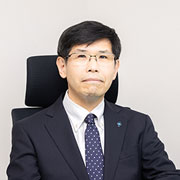
Keiichi Akita,Dean of the Faculty of Medicine
Institute of Science Tokyo